






A Major Achievement by Turkish Contractors
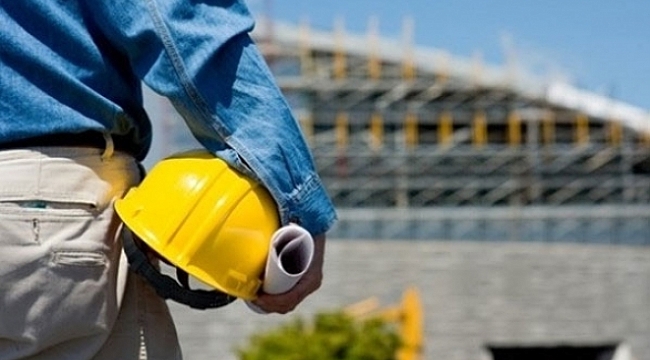
"From 1972 through the end of 2017, the Turkish construction sector completed 9,018 projects in 117 countries, worth USD 344.7 billion. Turkish contractors are now rebuilding the world."
— Economy and Real Estate ReportThe great achievement of Turkish contractors
The real-estate sector has made significant progress since its first steps in the 1920s. Türkiye, now home to some of the world’s largest contracting companies, is making its mark across the world through branded residences and infrastructure projects.
From 1972 through the end of 2017, the Turkish construction sector completed 9,018 projects worth USD 344.7 billion in 117 countries.
After years of difficulties, Türkiye is now a world leader in construction. Seda Tabak of Sabah Gazetesi reviewed the Turkish construction sector. The article follows. The Turkish construction sector, having delivered dozens of mega-projects, is also making a name for itself through developments in different parts of the world.
Turkish contractors are now rebuilding the world. Until the 1950s, the sector even imported nails from abroad because of material shortages; today it is able to compete globally. Construction, a driving force of the economy, now trains contractors and architects sought after for major projects around the world.
UNPLANNED BEGINNINGS
Until the 1950s, infrastructure and public-works construction accounted for the largest share of the construction sector. Major achievements in these fields occurred at various times during this period. Large organisations with technical expertise, supported by the state and making substantial investments, were established, including the State Hydraulic Works (DSİ) and the General Directorate of Highways. Their investments accelerated the construction sector, and this momentum continued until the 1960s.
The social and economic changes brought about by industrialisation, urbanisation and migration to cities gave housing construction a significant new dimension in Türkiye.
FINANCING SUPPORT ARRIVES
The role of housing cooperatives became increasingly evident with the Mass Housing Law No. 2985, enacted in 1984. Cooperatives accounted for one-third of housing construction in the 1980s and retained a share of more than 20% in the 1990s. The Mass Housing Administration (TOKİ) was established in 1984 alongside the Mass Housing Fund.
During the period that can be described as the first phase, from 1984 to 2003, TOKİ’s primary function was not to produce homes itself, but to provide financing support so that homes could be completed. During this period, loans were provided for 940,000 homes, most of them cooperative housing.
AN AXIS OF GROWTH
According to information compiled from Ministry of Economy data, the sector undertook its first contracting project in Libya in 1972. By the end of 2017, it had completed 9,018 projects in 117 countries, with a total value of USD 344.7 billion. There was also significant progress in average project value over the last ten years: it rose from USD 37.1 million in 2008 to USD 79.3 million, approximately doubling.
The construction sector, a principal axis of economic growth in Türkiye, aims to generate one-fifth of the USD 500 billion in services and export revenue targeted for the Republic’s centenary. The sector is expected to grow by 10–12% each year and contribute between one and two percentage points to Türkiye’s economic growth. As the sector grows under the leadership of the private sector, financing will become more important. Housing demand will also rise with population and income growth, and a need for 7.5 million homes is projected by 2023.
MEGA-PROJECTS WILL SET THE DIRECTION
Economic and political stability enabled real estate to take on a leading role in growth, particularly after 2010. With its strategic location at the crossroads of Europe, the Middle East and Central Asia, and a population of approximately 80 million, Türkiye offers major opportunities to real-estate developers and investors by combining a strong construction sector with growing commercial and industrial production.
Projects such as Marmaray, Canal Istanbul, the Third Bridge and Istanbul’s New Airport, together with urban-renewal programmes and mega-projects—especially in Istanbul—will shape activity in the near future. It is estimated that approximately 6.7 million homes will be demolished and rebuilt across the country over the next 20 years.
That equates to an average of 334,000 homes a year. With annual price growth of 18.4%, Türkiye overtook New Zealand, Sweden and Australia to become one of the world’s best-performing housing markets. In 2018, the continuation of public mega-projects and the completion of existing projects were also expected to give the sector significant additional momentum.